In need of a distraction? Something to gawk at? CRUSH Magazine has a quick solution for you: girls kissing!
Wait, what?
That’s right, folks. Don’t believe us? Let’s take a look at the success it’s had in Hollywood!
We’ve got the hot, steamy, sexy kiss between pop icons Madonna and Britney Spears at the 2003 MTV Video Music Awards, or that unexpected spit swap between bangin’ bombshells Scarlett Johansson and Sandra Bullock.
Believe us now? Sapphism is IN and it’s sexier than ever. Plus, the men love it!
The…men?
Yes, you heard it here. The men love performative sapphism.
Sapphism is an umbrella term for any sexual orientation that includes women attracted to other women, and sapphic refers to those who resonate with the identity. With this in mind, you might ask, “How can sapphic identity and male-centered gaze even exist in the same sentence?”
Representation of the sapphic identity has struggled for decades, especially in the early to late 2000s. The reason is rather unfortunate: a beautiful, tender love story between two sapphics that ends happily isn’t half the money maker nor attention grabber that publicly broadcasted oversexualization of sapphics is.
Subsequently, sapphism would be immediately associated with performance. It became so prevalent to where the terms “celesbian” (a portmanteau of “celebrity” and “lesbian”) and “fauxmosexual” (a portmanteau of “faux,” meaning “fake,” and “homosexual”) were coined to describe celebrities indulging in one another homoerotically for temporary publicity stunts.
Such portrayal of sapphism had been inflated not only by pre-planned kisses between non-sapphics in Hollywood but in other forms of consumable media.
In the early 2000s, sapphic fetishization was very prominent in music. Pop singer Katy Perry’s infamous single, I Kissed a Girl (2008), is a common example. The lyrics, “It felt so wrong, it felt so right, don’t mean I’m in love tonight,” associated sapphic intimacy with being something scandalous or frisky in nature but had nothing to do with actual romance. Additionally, male artists had expressed their sexual fascination with sapphics, like in rapper Boosie Baddazz’s single They Dykin’ (2007)–what a title, right?–where he raps, “I like girls who like girls, that attract me, two redbones kissin’ in the back seat.”
Film is no saint either as evidenced in the controversial film, Blue is the Warmest Colour (2013). The film follows the story of a French teenager, Adèle (Adèle Exarchopoulos), who goes on a journey of romantic discovery upon meeting an aspiring painter, Emma (Léa Seydoux). However, a majority of the film maintains an absurdly sexual focus. If that is not convincing alone, take a look at the Wikipedia page, which almost immediately describes the film as nothing more than a depiction of their, “…lesbian sexual relationship…” But how did the plot so badly go astray? Precisely, it’s the fault of the director: Abdellatif Kechiche; a heterosexual, cisgender man.
Exarchopoulos and Seydoux detailed the discomfort they experienced working with Kechiche, who allegedly subjected them to 10 days of “practice” for sexual scenes. Seydoux explained in an interview with The Independent that the extensive time and the intensity of the sex scenes had her, “…feeling like a prostitute,” especially given the uncomfortable presence of several cameras and encouragement of the two to act out orgasms for more than six hours.
This period’s misrepresentation of sapphism implied that to be sapphic was to perform for the male gaze. Thus, sapphism had become commodified, fetishized, and negatively impactful to those who wanted to come out publicly.
Well-known actor and show host Ellen DeGeneres publicly expressed her initial hesitance to even refer to herself as a lesbian, eventually coming out in “The Puppy Episode” of a since-ended ABC sitcom Ellen (1994-1998).
Similarly, actor Raven-Symoné was hesitant to come out as lesbian due to the implied impurity it would bring to her former reputation as a child star. The actor started off her career playing young Olivia Kendall in The Cosby Show (1984-1992). In a 2016 interview with L/Studio Presents, she expressed that she simply, “couldn’t say it out loud.” In her mind, the reception would have been something like, “Oh my god, little Olivia is gay…this is crazy.”
Sapphic portrayal in the early 2000s as a money making performance has led to uncertainty in public domains to formally identify as sapphic. So, the burning question of today: is the celesbian/fauxmosexual gimmick still prevalent?
Fortunately, not so much.
In recent years, sapphism has transcended male-centered sex appeal through initially tainted media like music, film, and now even professional atmospheres.
In the mid-2010s, former Disney actor now-turned-singer Hayley Kiyoko came out with the well-received single Girls Like Girls (2015). The release was accompanied by a viral music video of two female protagonists who realize they have romantic feelings for one another. This single, along with the remainder of Kiyoko’s discography, has left a lasting impression on the sapphic community, earning her the nickname “Lesbian Jesus” for her determination to reshape sapphic identity and perception.
Pop sensation Chappell Roan’s most recent album The Rise and Fall of a Midwest Princess tackles her personal journey of lesbian romance. Despite having hit No. 1 on the Billboard Artist 100, Roan has not let fame interfere with her objectives, continuing to shamelessly sing and talk about her identity as a lesbian woman. She put her pride quite simply for the fans: “Some shit’s changed but bitch, I hope you’re happy, ‘cause I’m a lesbian now.’”
Rhythm and Blues has been fueled by sapphic lyricism, too. Kehlani, who previously came out as bisexual, recently came out again as lesbian. Her lyrics have consistently celebrated sapphic intimacy, some examples being singles including Honey, Again, and features with other artists like, Ur Best Friend by Kiana Ledé (a queer artist) and Touch Me by Victoria Monét (a bisexual artist).
Many actors have come out proudly as sapphic, including Niecy Nash. Nash, more recently recognized as the therapist from the Netflix show Never Have I Ever (2020-2023), explained that she has never felt the need to formally come out. At the end of her speech at the 2023 GLAAD Media Awards, she stated, “My name is Niecy Nash-Betts and I’m a lover. I will never hide the very thing I was created for. Let’s continue to fight for equality and normalizing that love is love.”
Outside of popular media, sapphism exudes confidence in professional and political spaces. Karine Jean-Pierre, the current White House press secretary, is the first Black, Haitian, and openly lesbian person to hold the position. Kansas representative Sharice Davids is one of the first Native American lesbian women to serve in her department. And Kate Brown, former governor of Oregon, is the first openly bisexual person to be elected as a secretary of state.
Despite the turbulent nature of sapphism portrayal, the determination to unlearn old stereotypes, advocate for LGBTQ+ rights and representation, and learn self-acceptance has done wonders for sapphic persons everywhere. We have come, almost, full circle to the normalization of existing as a sapphic in a heteronormative society. To be sapphic, despite its longtime sexual connotations, has come to simply mean to be a lover of women, with complete disregard for male-centered sexual fantasies.
Normalization of the sapphic identity still has a long way to go, as do most important issues today. Nonetheless, given this immense progress, I bid a bitter farewell to celesbianism and fauxmosexuality—and give a warm welcome to the exquisite world of secure sapphism.
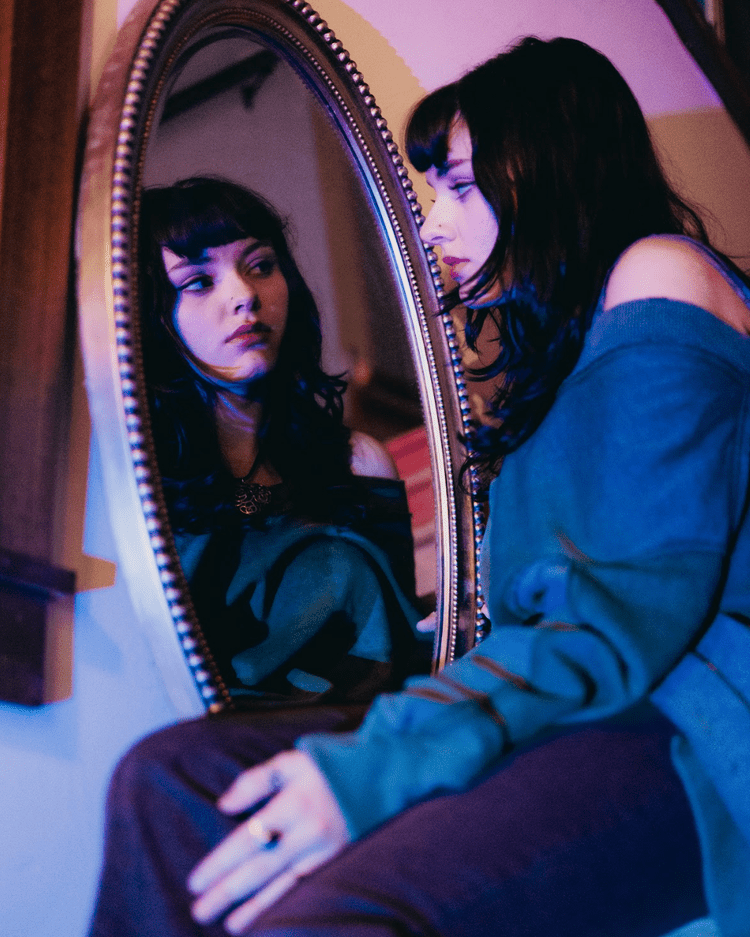
cover image by stacey pierre